
Electric Vehicles: Everything You Need to Know
Electric vehicles are no longer the future — they’re the present. And for First Nations and rural communities, EVs offer unique advantages: lower fuel costs, reduced maintenance, energy independence, and access to no-cost charging networks like Free Ride EV.
This page gives you the real facts: how EVs work, which models we recommend, and how your community can access special purchase programs.
How Electric Vehicles Work
- Electric motors replace the combustion engine — far fewer moving parts
- A large battery pack stores energy to power the motor
- Regenerative braking captures energy every time you slow down
- Charge at home overnight, or use public charging stations
- No oil changes. No exhaust. Lower lifetime maintenance costs.
EV Performance in Canadian Winters
One of the most common concerns we hear is about cold weather performance. Here’s the truth:
- Modern EVs are engineered for cold climates, including Canadian winters
- Battery range is reduced in extreme cold — typically 20-30% — but this is manageable with planning
- Many EVs have battery pre-conditioning systems to warm the battery before driving
- Home charging overnight means you always start with a full charge
- Free Ride EV’s no-cost charging network ensures you’re never stranded
Charging Guide
How to Charge Your EV
Our Installations
Chargers Built for Communities
The Pinaymootang First Nation charging station — an ABB DC fast charger with Level 2 units on a single skid. This is what we build across the Prairies.
Every Free Ride EV Network charger provides no-cost charging — always free, no account needed.
- ABB DC Fast Charger
- Level 2 ChargePoint
- No-cost to users
Public Charging
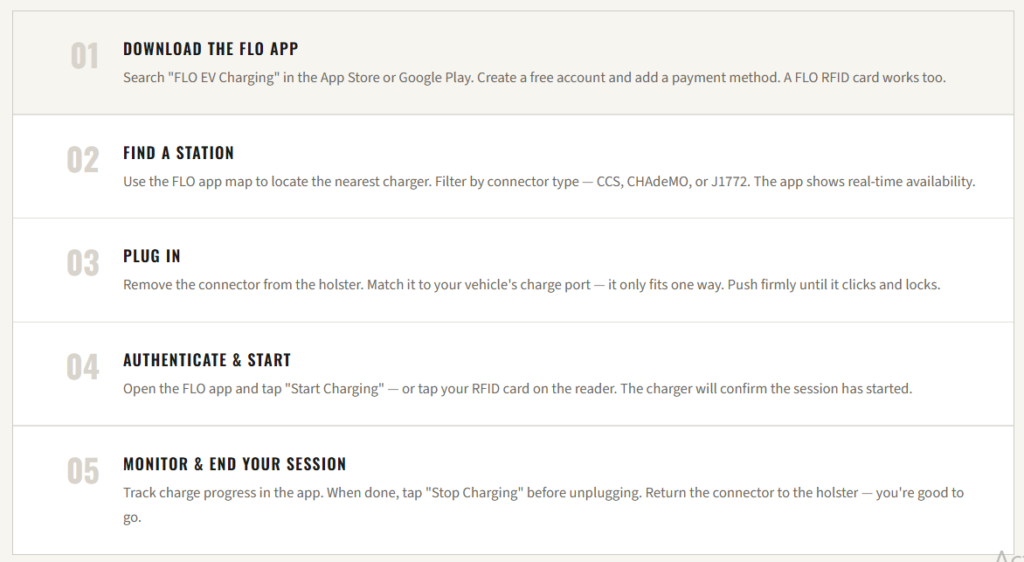
Step-by-Step: FLO Charger Network
Free Ride EV Network
Always Free to Charge
No Account Needed
Free Ride EV network chargers require no app, no payment, no registration. Drive up, plug in, and charge.
Thompson–Winnipeg Corridor
Phase 2 deployment expands the Free Ride EV network along the full Thompson–Winnipeg route — serving communities that have never had charging access.
First Nations Priority
Free Ride EV charger sites are prioritized for First Nations and remote northern locations where commercial charging networks don’t reach.